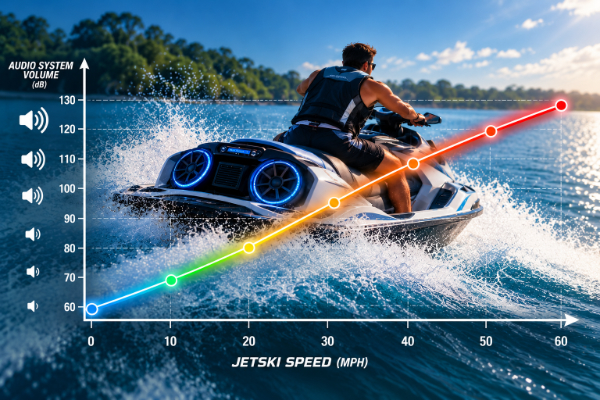
A jetski can go from an easy cruise to wide-open throttle in seconds, and the soundtrack has to keep up. Between wind, engine noise, and constantly changing speed, audio that sounds great while idling at the dock can get buried once the water starts moving.
That is where smarter PWC audio setups come in. Phone-based controls, custom EQ profiles and speed-sensitive volume can make the system feel more like a part of the machine itself, instead of an add-on that requires constant rider adjustments.
The smartphone is already the music source for most riders, so the next logical step is to make it part of the control architecture.
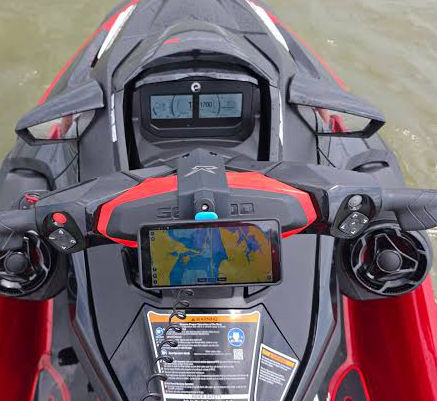
A properly mounted phone can provide playlist selection, source control and (when the audio hardware supports it) access to EQ, DSP settings and system configuration. That's way more flexible than relying exclusively on the stock receiver display.
An important distinction is between setup control and underway control. Wet touchscreens, gloves, and vibration are poor conditions for navigating menus. A smart PWC installation lets the phone handle deeper functions while keeping immediate commands such as volume, pause and track changes, etc. available through the physical controller.
JL Audio MBT-CRXv3 fits that model well. It accepts Bluetooth audio while providing dedicated marine-grade controls; including independent level controls for two audio zones.
Pair a securely mounted smartphone with a marine-grade controller to separate setup tasks from on-the-water adjustments.
Ride-Mode EQ: Tune for What the Jetski Is Actually Doing
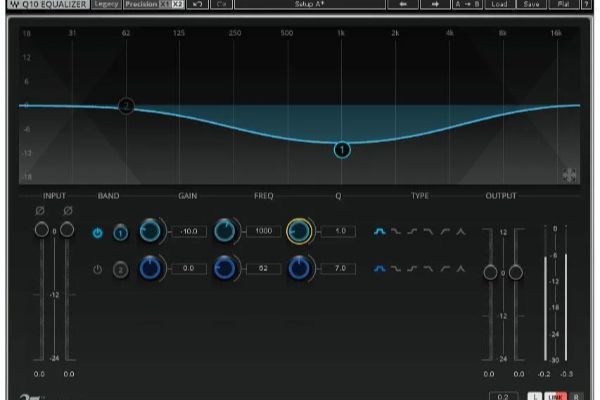
A single EQ curve can only give you "average quality" sound because the acoustic environment changes drastically with the ride.
A better approach is to build distinct DSP profiles:
Cruise: balanced tuning with moderate bass and a relaxed top end.
Sport: less emphasis on deep bass that consumes amplifier headroom. Focus on the frequency range that remains intelligible against wind and engine noise.
Party: fuller low-frequency output and a broader “fun” curve for sandbar, dockside or low-speed listening.
“Cruise,” “Sport” and “Party” are not universal factory modes built into every marine receiver. They are a good way to think about how you should go about configuring compatible DSP-equipped systems. The key is to tune each profile for the speakers, amplifier, installation location and riding environment rather than simply boosting several EQ bands... but, still check out both manufacturer defaults on receivers as well as any settings profiles available in whatever app you're using, as a place to start.
Midrange clarity over “thump,” controlled highs for detail through wind noise
Party
Sandbar, raft-ups, dockside listening
Enhanced low end, wide “smile” curve for fun, minimal concern about engine noise
Auto-Volume Should Follow the Ride
Manual volume changes are one of the most repetitive parts of listening on a jet ski. Between idle, acceleration, and wind and engine noise you've probably already naturally found at least 3 different volume levels you sort of go to as needed, if not more.
Speed-compensated volume solves that problem by changing system output automatically as speed changes.
MotoMarine carries the Fusion Apollo MS-RA770, which combines Speed vs. Volume with smartphone-based DSP setup and networked control. You can learn more about it here.
Speed-aware volume tracking keeps music audible at higher speeds without blasting you at idle.
Smart Upgrades Do Not Have to Replace Factory Control
The smartest installation might be keeping the factory interface, but upgrading the underlying hardware to get modern features and improved sound.
Our Yamaha 2021–2026 Audio Upgrade Harness makes that something you can tackle DIY. On supported Yamaha FX models, and newer GP/VX applications, it allows an aftermarket amplifier and speaker upgrade while retaining control through the Yamaha Bluetooth controller.
DIY-Friendly Smart Audio Upgrades
Use purpose-built harnesses and marine-rated components so your jetski audio upgrade plugs into factory controls cleanly—no cutting main harnesses or guessing at wiring. Explore Seadoo Wire Harnesses
The Next PWC Audio Upgrade Is Intelligence, Not Just Wattage
More amplifier power still has value, but wattage alone does not make an audio system easier to use.
A genuinely modern jetski system should reduce the amount of attention the rider has to give it. The phone can manage playlists and deeper configuration. Physical controls can handle immediate commands. DSP profiles can match different riding conditions. Speed-aware volume can compensate automatically as the noise floor changes.
That is the real promise of smart PWC audio: not more controls, but better control with fewer interruptions.


 A single EQ curve can only give you "average quality" sound because the acoustic environment changes drastically with the ride.
A better approach is to build distinct DSP profiles:
A single EQ curve can only give you "average quality" sound because the acoustic environment changes drastically with the ride.
A better approach is to build distinct DSP profiles: